
WV Statehood
OIL AND GAS HOME ◆ WV Statehood ◆ Civil War ◆ profiles ◆ GALLERY ◆ EVENTS ◆ CONTACT US
The Two Virginias
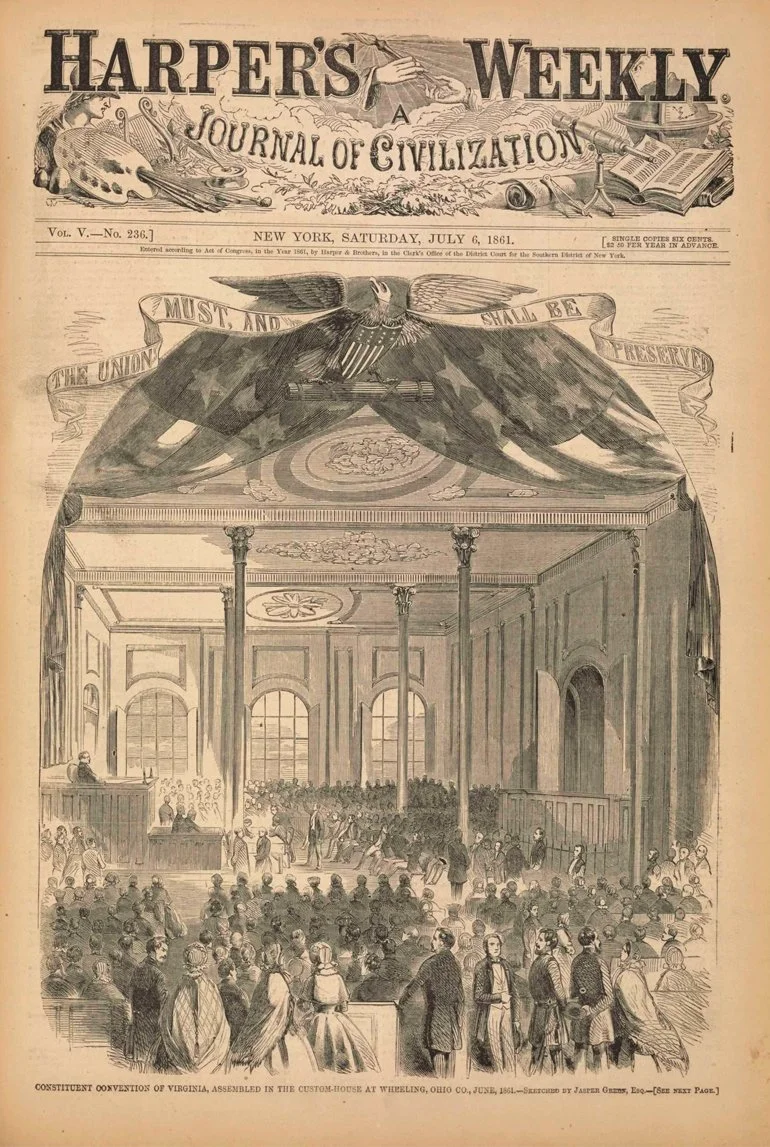
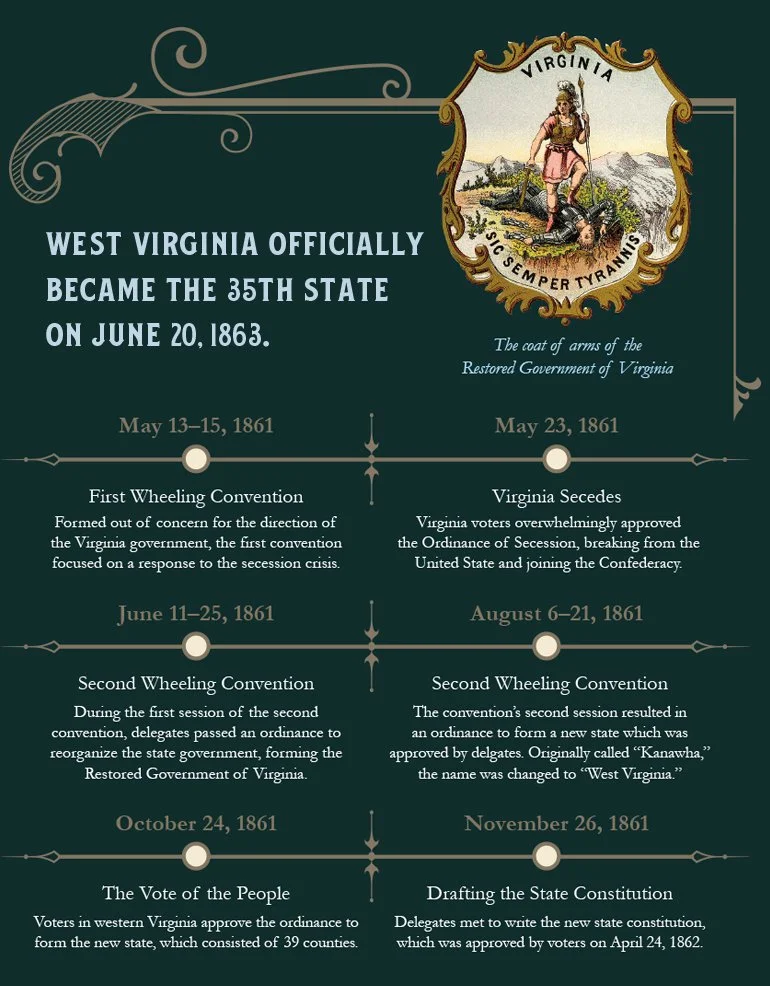
Washington Hall in Wheeling, Virginia, was the site of the anti-secession convention known as the First Wheeling Convention held May 13–15, 1861. After Virginians voted to secede from the Union, the Second Wheeling Convention was held in June 1861 at the Custom House in Wheeling. Delegates called for the reorganization of the state government which remained loyal to the Union during the Civil War. Delegates convened again in August 1861 and approved an ordinance to form a new state—West Virginia.
“West Virginia was home to many generations of Native Americans long before European settlers arrived. Early Woodland peoples such as the Adena built mounds over the remains of chiefs or other people of high social standing.”
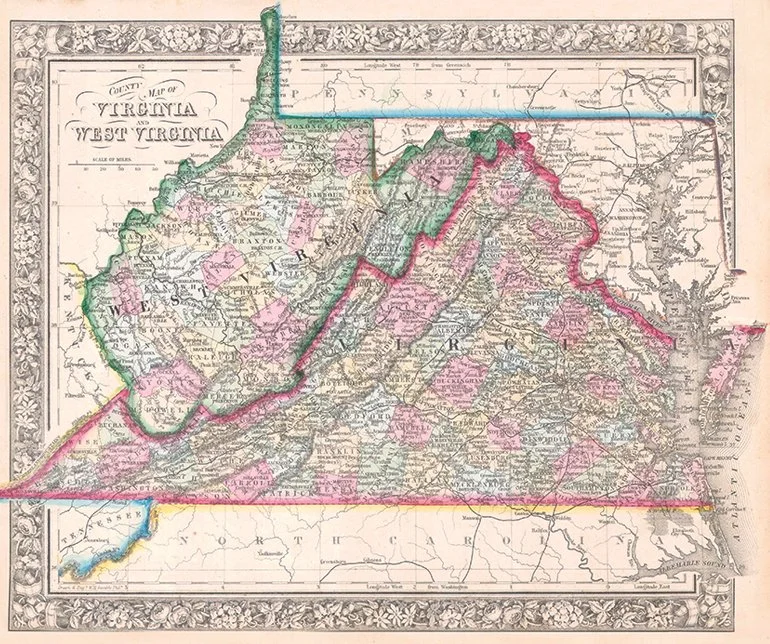
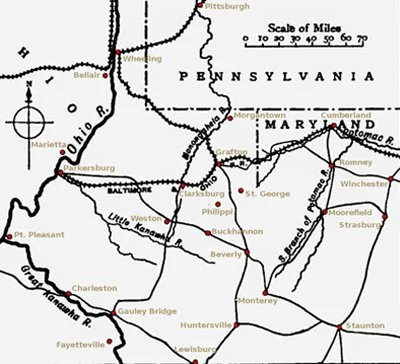
This 1864 map of Virginia, West Virginia and Maryland was revised version of S. A. Mitchell Jr.’s 1860 map of the same region to accommodate for the separation of Virginia and West Virginia in 1862. Following the Civil War, Harpers Ferry, along with all of both Berkeley and Jefferson Counties, was separated from Virginia and incorporated into West Virginia, creating the West Virginia panhandle.
The Restored Government of Virginia
The Restored Government of Virginia was the Unionist government of Virginia during the Civil War that opposed the government which had approved Virginia’s secession. Francis Harrison Pierpont became governor of the Restored Government of Virginia—a position he held throughout the Civil War. Following the war, Pierpoint was named governor of Virginia during the first years of Reconstruction, serving from 1865–1868. Wheeling served as the headquarters of the Restored Government of Virginia, until West Virginia was admitted to the Union. Pierpont then moved the headquarters to Alexandria. Following the war, the state government of Virginia was relocated to Richmond.
Convincing the President
President Abraham Lincoln sought the advice of his cabinet about the issue of creating the new state of West Virginia. After Congress approved the statehood bill authorizing West Virginia to join the Union, it was then sent to Lincoln for his signature of approval. Congressman Jacob Beeson Blair, a Parkersburg native, met with the president for several hours on December 31, 1862 to convince Lincoln to sign the bill. Blair went to the White House the next morning to get the president’s answer and was informed of Lincoln’s approval.
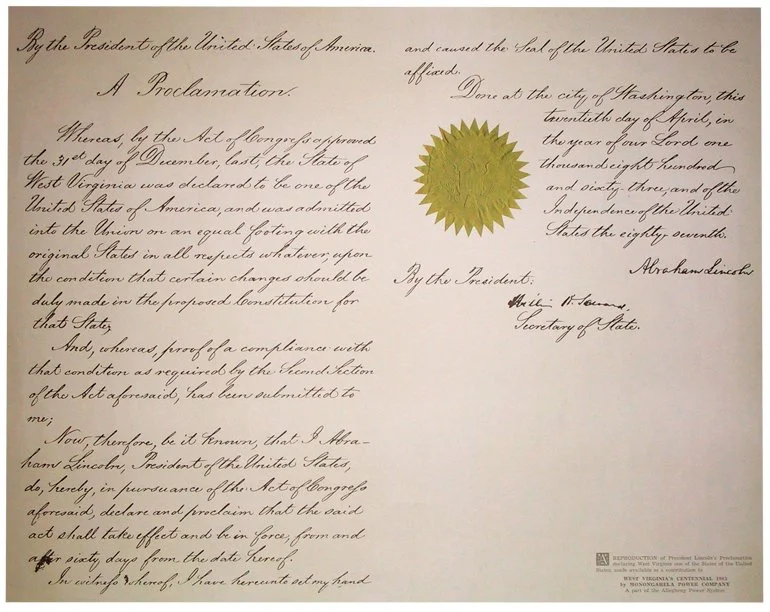
President Abraham Lincoln wrote this proclamation on April 20, 1863 stating that West Virginia would become a new state within 60 days, pending changes to the original draft of the state constitution.
The Path to Statehood
West Virginia did not become a state overnight. The people of western Virginia had grown angry because of lawmakers’ inattention to their pleas for improvements to transportation infrastructure and access to public education. A series of events led to the split from Virginia.
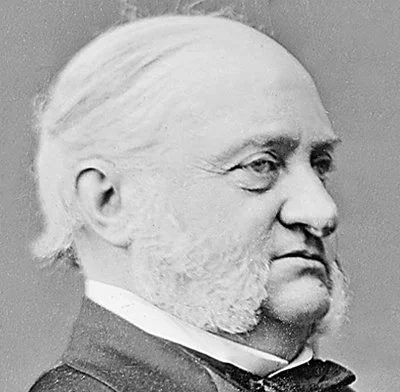
Peter G. Van Winkle’s Influence on the Founding of West Virginia
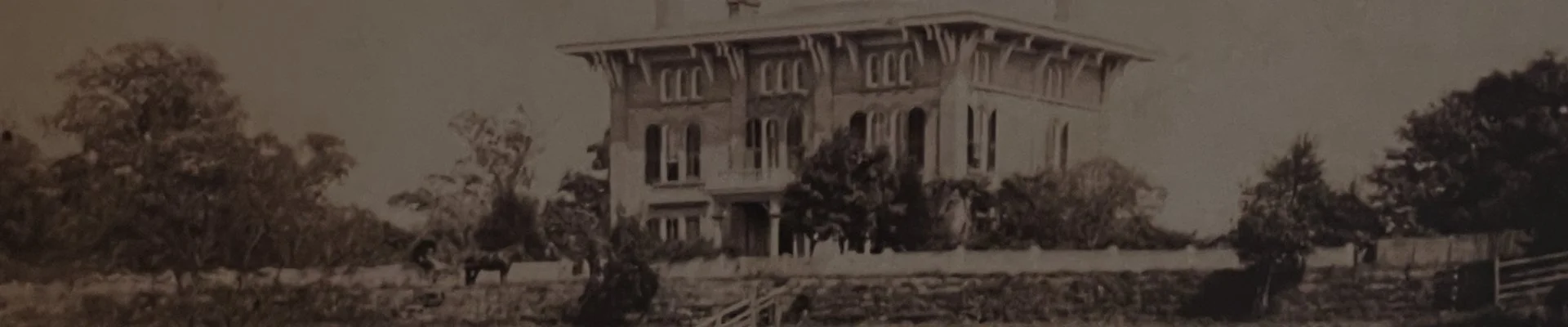
Peter Godwin Van Winkle was a lawyer from New York who moved to Parkersburg where he practiced law. Van Winkle became a prominent person in the area as the treasurer and later president of the Northwestern Virginia Railroad Company, and through his affiliation with the Rathbone family when he married Juliet Rathbone, the eldest daughter of William P. Rathbone.
A staunch supporter of the Union, Van Winkle was highly motivated by his affiliation with the railroad to protect his company’s interests when Virginia seceeded from the United States. As a result, Van Winkle helped to fund and organize the First Wheeling Convention held May 13–15, 1861. When delegates voted to form a new state, it was Van Winkle who drafted the map of which counties would be part of the new state. Many of the counties were ones where the B&O Railroad ran through, thus forming the famous panhandle shape of West Virginia.
Van Winkle would go on to write the constitution for the new state of West Virginia, and was elected as one of the state’s first U.S. Senators, serving from 1863-1869. Arthur I. Boreman succeed him following his term.
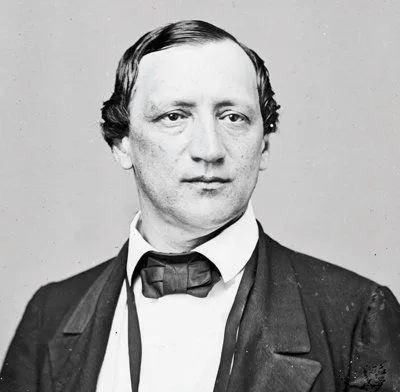
John S. Carlile and the Call for a New State Government
John S. Carlile was another prominent figure at the Wheeling Conventions, urging convention delegates to draft a proclamation for a new state government. Carlile took the lead in drafting “A Declaration of the People of Virginia,” which delegates approved on June 17, 1861. The declaration, signed by 86 of the 100-plus delegates, provided a rationale for forming a Virginia state government that would remain loyal to the Union. From 1861 to 1863, the Reorganized Government of Virginia, based in Wheeling’s Custom House, authorized the formation of the new state of West Virginia.
Establishing State Leadership
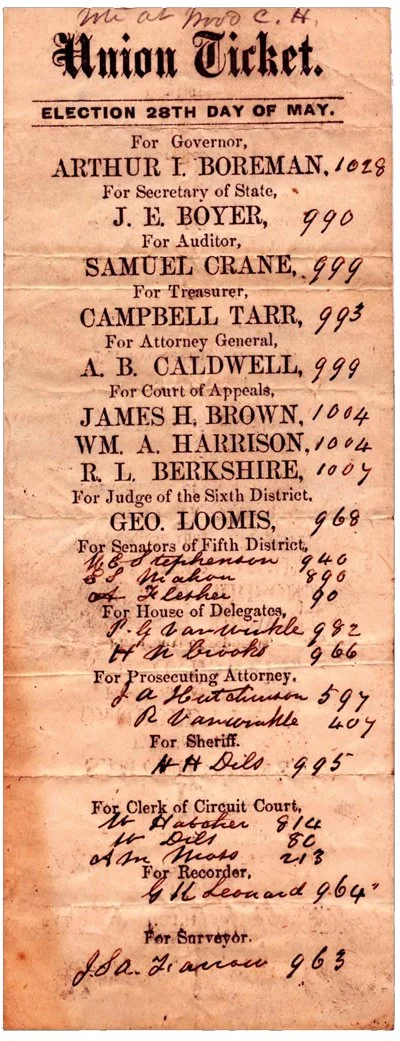
This ballot from May 28, 1863 lists the Union party candidates running for office in the first election of officials for the new state of West Virginia. The ballot includes the vote totals each candidate received at the Wood County courthouse. Arthur I. Boreman won the election, becoming the first governor of West Virginia.
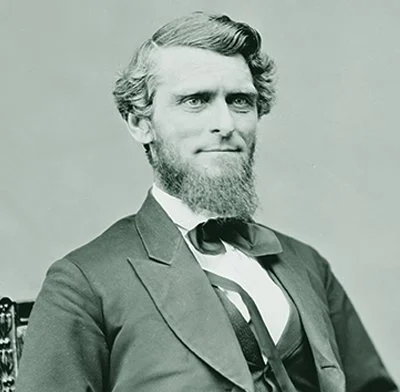
Arthur I. Boreman was elected as the first governor of West Virginia. He served from June 20, 1863 to February 26, 1869.
Peter G. Van Winkle was elected as a U.S. Senator, serving from 1863 to 1869.
Waitman T. Willey was elected as a U.S. Senator, serving from 1863 to 1871.
Archibald S. Dungan represented the 1st congressional district, serving from 1863 to 1865.
William Gay Brown represented the 2nd congressional district, serving from 1863 to 1865.
Jacob B. Blair represented the 3rd congressional district, serving from 1863 to 1865.